
FM Global Roofing Issues in Puerto Rico: Why Commercial Roofs Need Higher Standards
- Nelson Alvarado

- 23 may
- 3 min de lectura
Commercial roofs in Puerto Rico face a different level of risk than roofs in many mainland markets. The island brings together heat, humidity, salt air, heavy rain, tropical storms, hurricanes, and aging flat roof systems. For building owners, facility managers, manufacturers, warehouses, and industrial operators, the roof is not just something that keeps water out. It is one of the most important systems protecting the building, the business, and the people inside.
That is why FM Global-related roofing concerns matter. FM Global roofing issues in Puerto Rico are really commercial roof risk issues, especially when wind uplift, drainage, documentation, and storm readiness are not properly addressed.The issue is not just whether a roof is leaking today. The bigger question is whether the roof is properly designed, documented, maintained, and ready for Puerto Rico’s real weather conditions. A roof that performs well during normal weather can still become a major liability when high winds, ponding water, clogged drains, or weak edge details are exposed during a storm.
One of the biggest concerns for commercial roofs on the island is wind uplift. During strong wind events, the roof can experience pressure that tries to lift parts of the system away from the building. Corners, edges, flashings, rooftop equipment, curbs, and penetrations are often the most vulnerable areas. If those details are not properly installed or maintained, a small weakness can become a larger roof failure.
Drainage is another major issue. Many commercial buildings in Puerto Rico have low-slope or flat roof systems. When drains are blocked, undersized, or poorly maintained, water can sit on the roof longer than it should. Ponding water adds weight, accelerates wear, exposes weak seams, and increases the chance of leaks. In a place where heavy rain can arrive quickly, drainage should not be treated as a minor maintenance item.
Documentation is also part of the roofing problem. Many owners do repairs, coatings, or patchwork without keeping a clear roof record. Later, when an insurance review, property sale, facility audit, or major storm event occurs, they may not have the information needed to show what was done, what materials were used, where repairs were made, or what condition the roof was in before the damage. A commercial roof should have a file, just like any other important building asset.
FM Global roofing concerns point to a bigger truth: commercial roofs need to be managed as risk-control systems, not just repair expenses. That means owners should know the roof type, age, problem areas, drainage condition, repair history, coating condition, and storm-readiness level. Waiting until water enters the building is usually the most expensive way to manage a roof.
For Puerto Rico property owners, the smarter approach is preventive. A roof inspection before storm season can identify weak edges, failing seams, clogged drains, loose flashing, ponding areas, coating deterioration, and rooftop equipment issues. These findings give owners a chance to plan repairs before small problems become emergency costs.
The goal is not just to have a roof that looks good from the ground. The goal is to have a roof system that is documented, maintained, and ready for the conditions the island can bring.
For commercial buildings, warehouses, industrial facilities, and manufacturing properties, that kind of roof planning can reduce risk, protect operations, and support better long-term decisions.
Mammoth Roofing PR helps commercial building owners in Puerto Rico evaluate roof conditions, identify risk areas, and plan smarter commercial roofing repairs, coatings, maintenance, and replacement strategies. When the roof is treated like an asset, owners can make better decisions before the next leak, storm, or insurance issue forces the conversation.
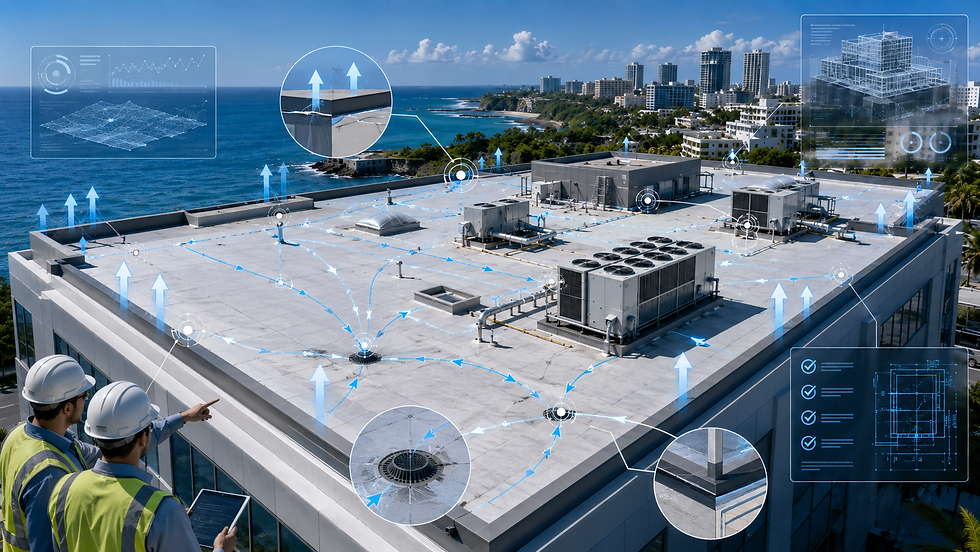
What Puerto Rico Building Owners Should Check
Before hurricane season or before renewing insurance coverage, commercial building owners should review the condition of their roof system. The most important areas to check are roof edges, drains, scuppers, ponding water areas, rooftop equipment, penetrations, flashing, coating wear, open seams, and previous repair areas.
A roof may look acceptable from the ground, but the real risk is usually found in the details. Wind, water, and heat expose weak points over time. That is why a roof inspection should not only ask, “Where is it leaking?” It should ask, “Where is this roof vulnerable?”
If your building has roof leaks, ponding water, coating wear, storm damage concerns, or insurance-related roof documentation needs, Mammoth Roofing PR can help you take the next step.